
2026-10-09 ·
Preventing Leaks During Moreno Valley's November to March Rains
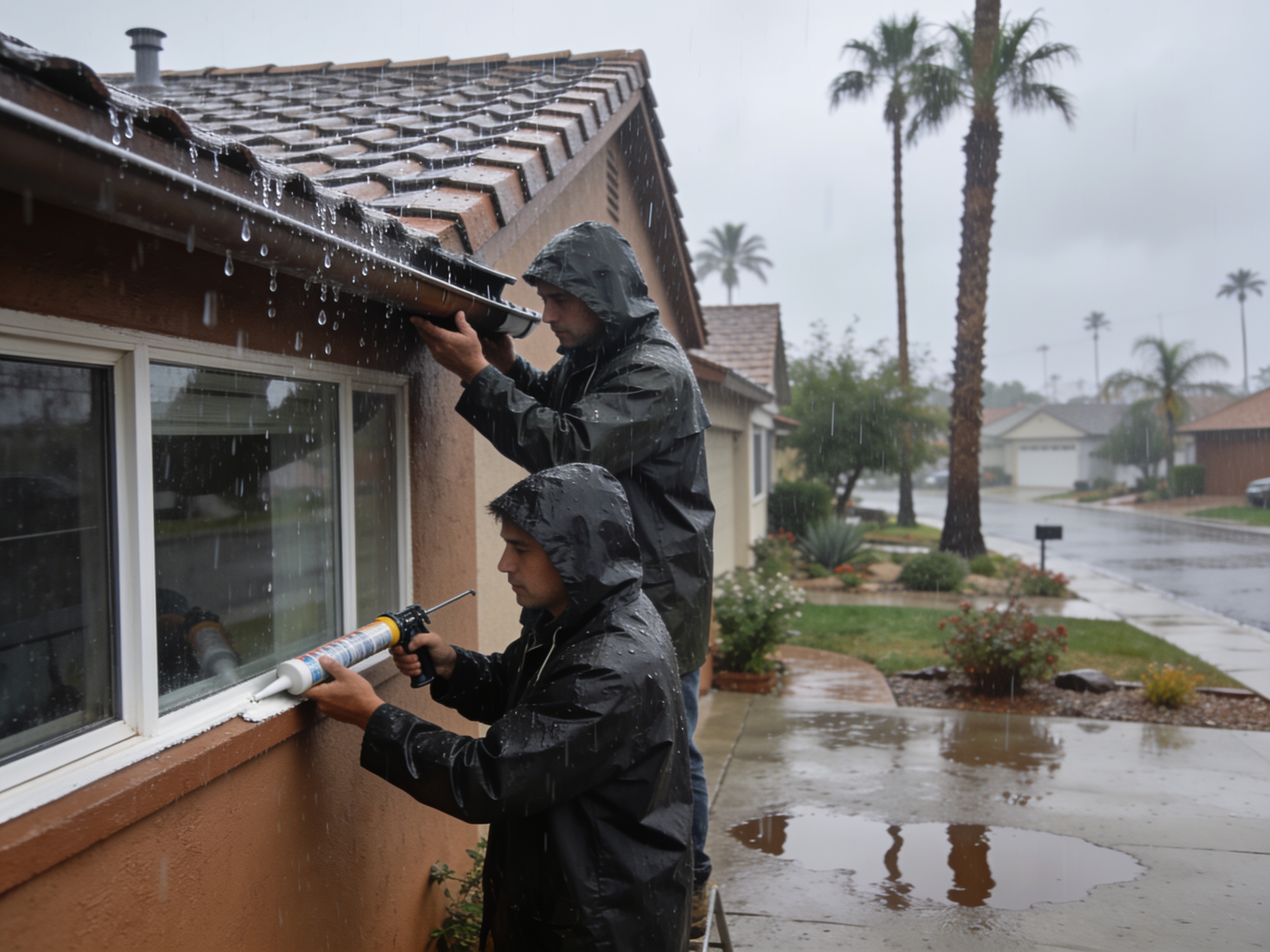
Quick answer: To prevent roof leaks in Moreno Valley, check tiles after every Santa Ana wind event, clear gutters, drains and the weep screed in October, and flush the attic AC condensate line. Most of the year's rain falls November through March. If water is already inside, call (555) 010-0000.
Updated October 2026. Climate figures are NOAA 1991 to 2020 normals for the March Air Reserve Base station.
Moreno Valley is dry most of the year, which is exactly why winter storms cause so many leaks. Roofs, gutters and drains go months without being tested, then face several inches of rain in a few weeks.
When the rain actually falls
| Month | Normal rainfall (in) | |---|---| | November | about 0.67 | | December | about 1.77 | | January | about 2.05 | | February | about 2.43 | | March | about 1.51 | | Year | about 10.7 |
November through March brings roughly 8.4 of the city's 10.7 annual inches, and February is the wettest month on average. Years vary a lot, and a single storm can drop more than a typical month. Summer monsoon bursts are less common but can dump heavy rain in an hour.
The Santa Ana wind problem
Fall and early-winter Santa Ana winds often arrive before the first big storm. They lift and crack concrete roof tiles, blow debris into gutters and valleys, and loosen vent caps. Look over the roof from the ground, or with binoculars, after every strong wind and before rain is forecast.
October and November: get ready
- Roof check: look for slipped or broken tiles, gaps at ridges and lifted shingles. Have a roofer check flashing at chimneys, vents, skylights and valleys if the roof is over 15 years old or has leaked before.
- Gutters and downspouts: clear debris and make sure downspouts discharge a few feet from the foundation.
- Yard drains and swales: flush area drains, clear the curb outlet, and keep side-yard swales free of storage and soil.
- Weep screed: keep soil and mulch below the metal strip at the base of stucco walls so water can drain out of the wall.
- Windows and doors: check caulking and weatherstripping; clear slider tracks and weep holes.
- Trees: trim branches over the roof.
December to February: during storm season
- Walk the property during the first heavy rain. Look for water ponding against walls, overflowing gutters and water getting into the garage.
- Check the attic with a flashlight after big storms for drips, wet insulation or stained decking.
- Keep a tarp, rope, buckets and a few sandbags on hand. The City of Moreno Valley and Riverside County often announce sandbag locations before major storms.
- Know your FEMA flood zone (msc.fema.gov). The city's flood page notes 2010 flooding near Heacock St south of Cactus Ave and near Day St at Alessandro Blvd.
Inside the house
- Water heater: check for rust at fittings and in the drain pan. Hard water here wears tanks faster.
- AC condensate: the attic air handler's line can clog with algae over summer. Have it flushed in fall. See AC condensate leak damage.
- Hoses and connectors: swap rubber washer hoses and old toilet and sink connectors for braided lines.
- Hose bibs: on the few nights near freezing, disconnect hoses.
Patio covers, skylights and additions
Leaks often start where an addition, patio cover or skylight meets the original roof. If yours was added later, have the flashing at that joint checked.
After a storm
If water gets in, stop or catch it, photograph the damage and the roof from the ground, and start drying within 24 to 48 hours. Insurers generally cover rain that comes in through wind-created openings, not wear-and-tear leaks, so maintenance records help.
Quick checklist
- Roof and flashing inspected (October).
- Gutters, downspouts and yard drains cleared.
- Soil below the weep screed; swales clear.
- AC condensate line flushed; water heater checked.
- Braided hoses installed.
- Tarp, buckets and sandbags ready.
- Flood zone checked; flood insurance considered (30-day NFIP waiting period).
FAQs
Q: When is the rainy season in Moreno Valley? A: Most rain falls from November through March, and February is the wettest month on average, about 2.4 inches.
Q: How can I prevent roof leaks? A: Check after wind events, keep gutters and valleys clear, and have flashing at vents, chimneys and skylights checked before winter.
Q: Does homeowners insurance cover roof leaks from rain? A: Generally only if water came in through an opening caused by a covered peril such as wind, not wear and tear.
Q: Where can I get sandbags in Moreno Valley? A: The City of Moreno Valley and Riverside County announce sandbag locations before major storms. Check the city's website.
Related
- Rain got in: ceiling and roof leak water damage.
- Wind damage: storm damage restoration.
- Runoff inside: flash flood cleanup.
- Need help now: [water damage restoration in Moreno Valley](/).
Sources
- NOAA NCEI 1991 to 2020 Climate Normals, March ARB station
- City of Moreno Valley flood protection page
- FEMA Flood Map Service Center; NFIP waiting period
- California Department of Insurance